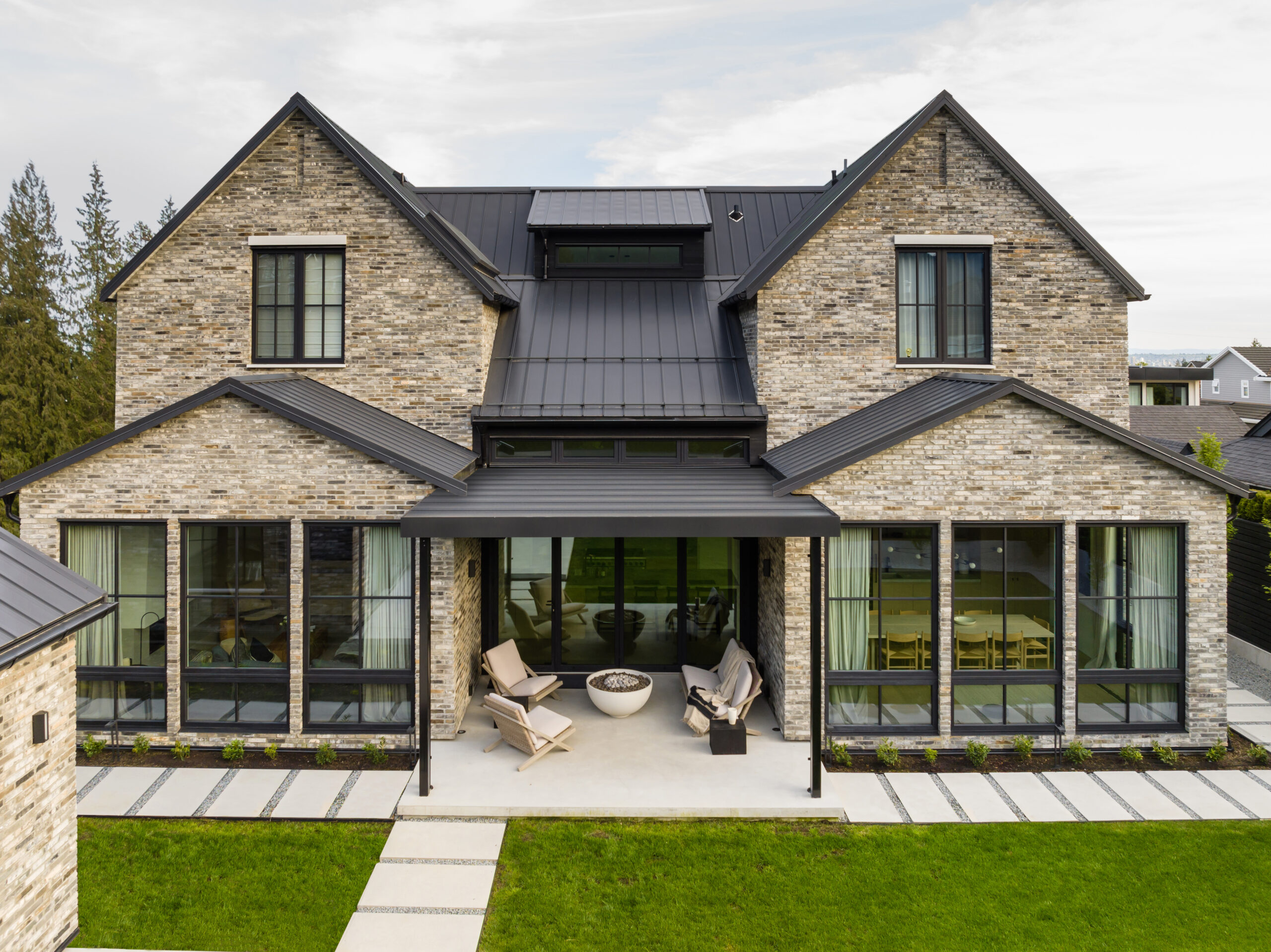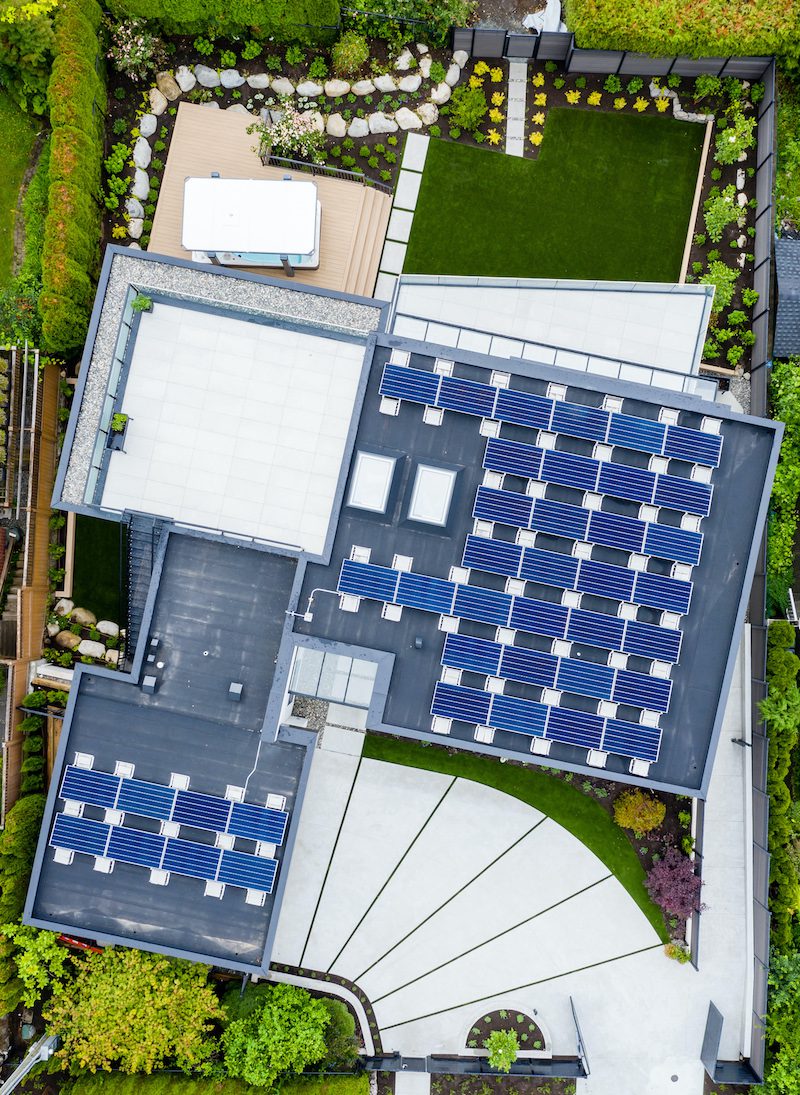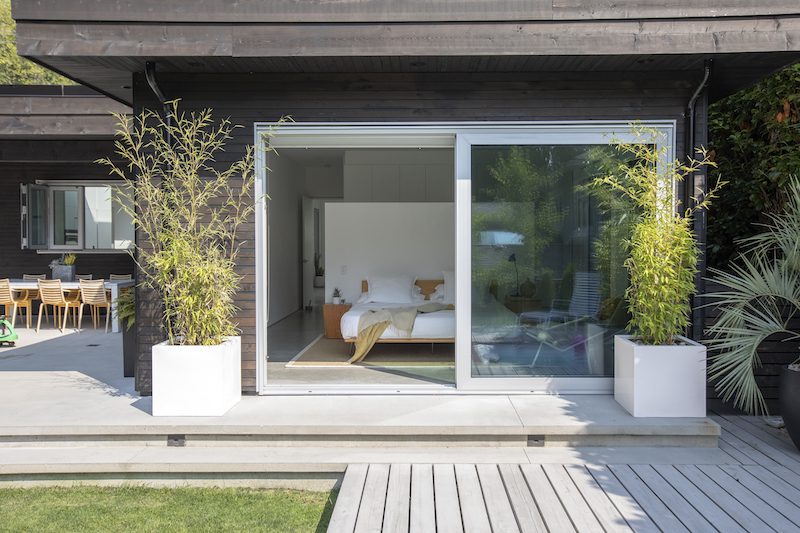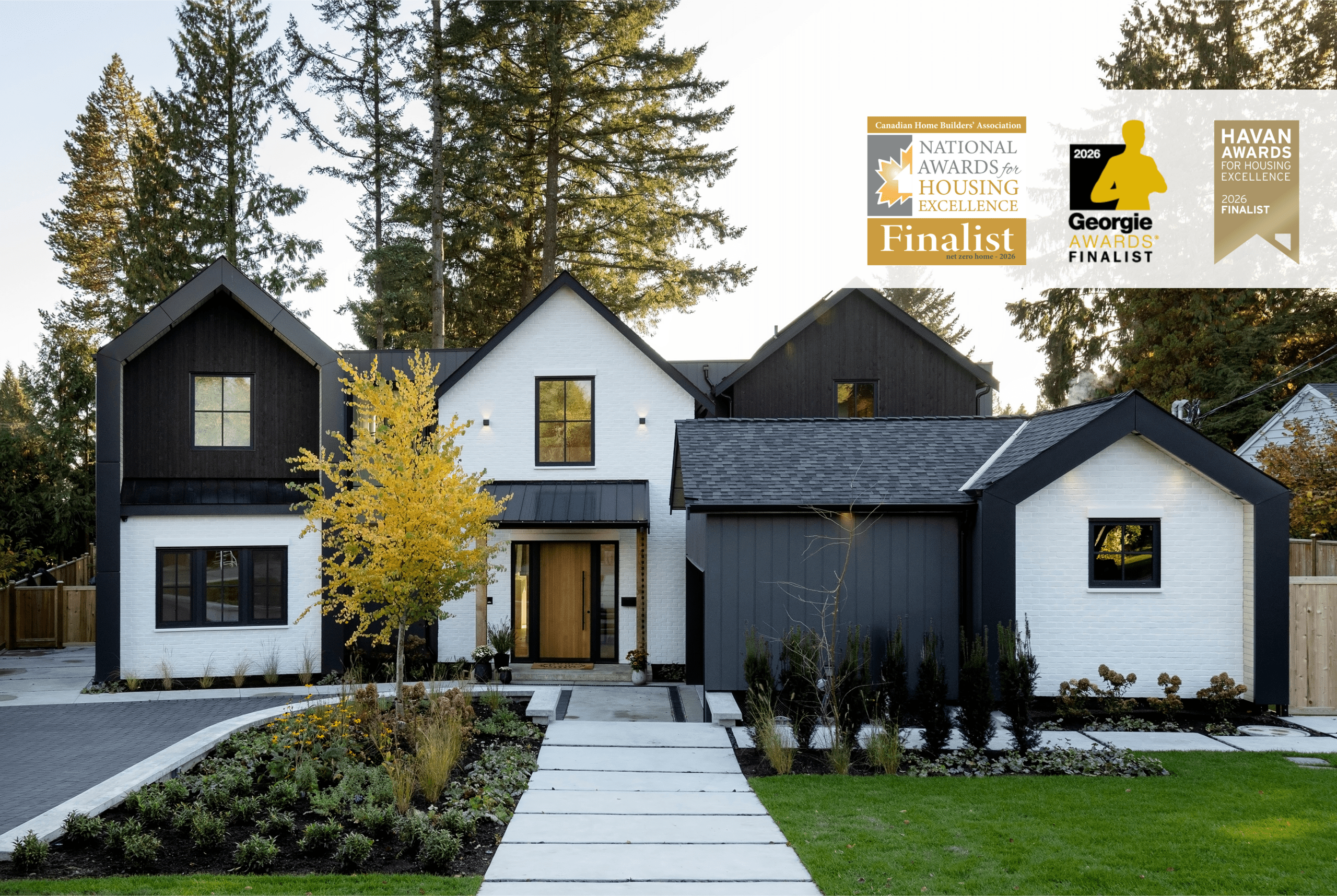
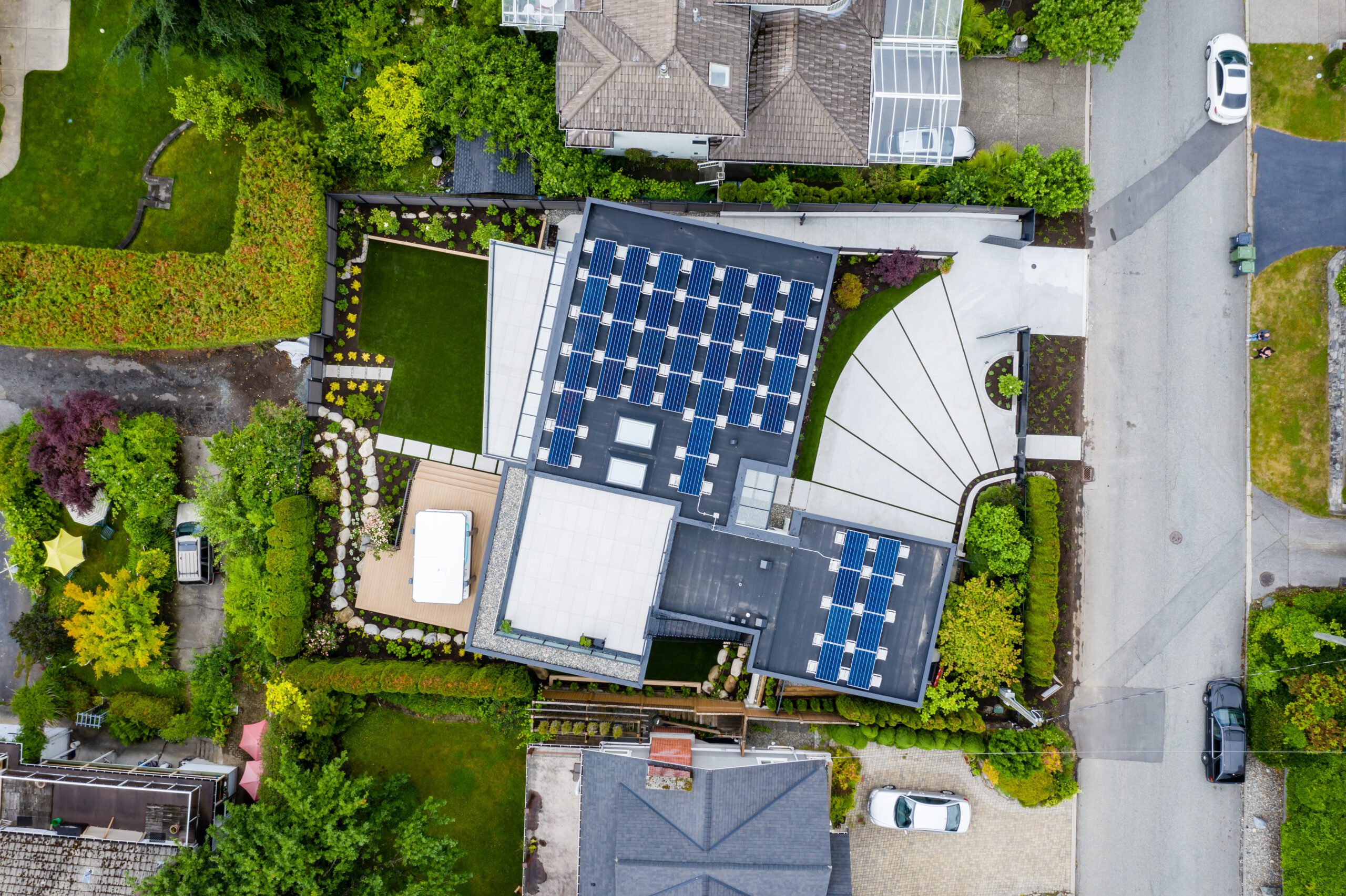
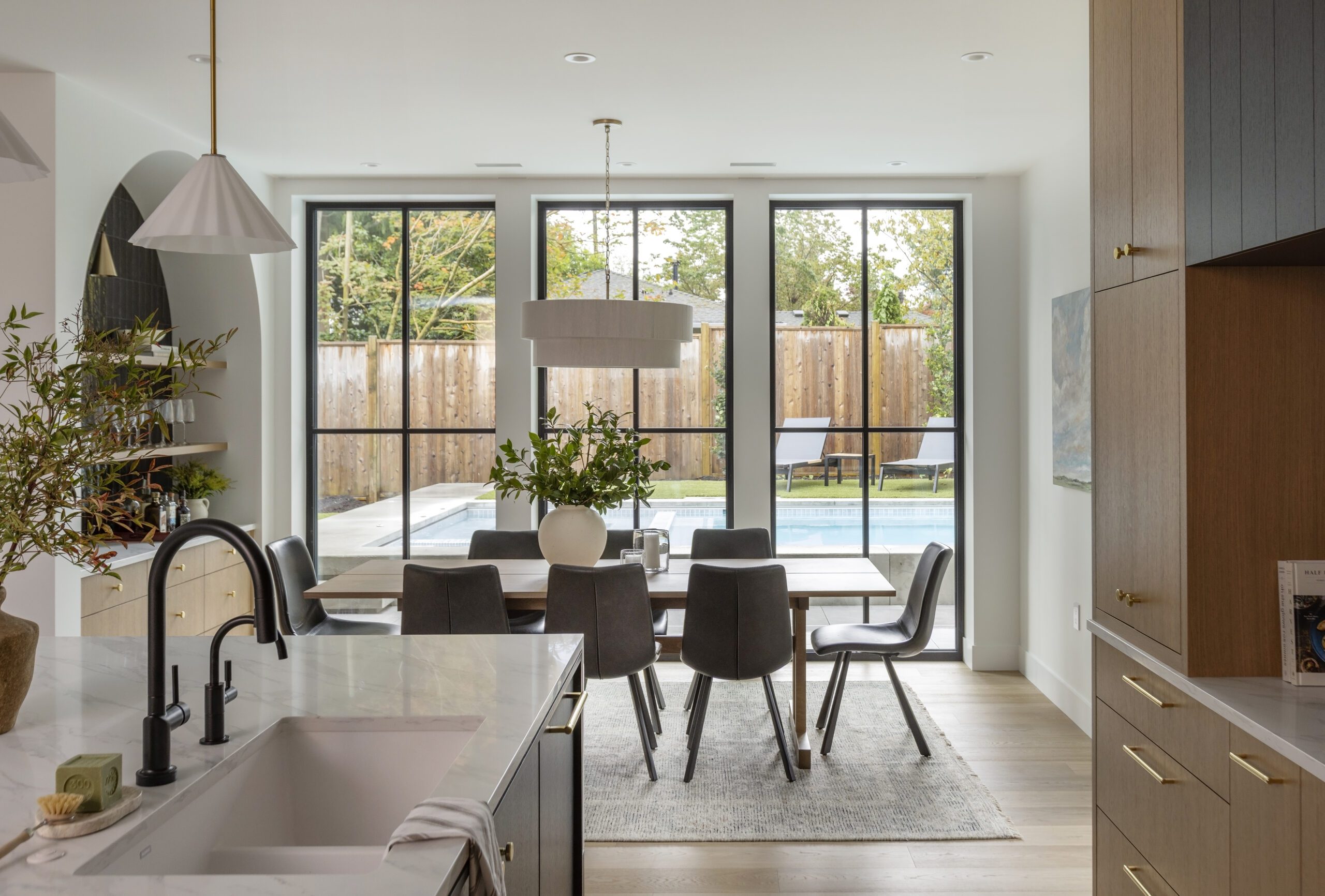
Pictured above is our Haven (Net Zero Lifestyle) project, a Net Zero home that has been named a finalist for three energy efficiency awards, including CHBA National Awards for Housing Excellence Finalist for Best Custom or Renovated Net Zero Home, CHBA BC Georgie Awards Finalist for Best Energy Labelled Home: Custom, and HAVAN Awards Finalist for Best Energy Labelled Home: Custom.
Net Zero Home Summary: For many homeowners in North Vancouver, building a Net Zero home is worth the investment. These homes are designed to produce as much energy as they use, resulting in lower energy costs, improved comfort, long-term sustainability and increased property value. While upfront costs are higher, advances in construction and technology have made Net Zero Energy homes more attainable than ever.
Net Zero homes are quickly becoming the standard for high-performance residential construction in North Vancouver and across the Lower Mainland.
At Hasler Homes, we specialize in building high-performance homes and have firsthand experience designing and constructing Net Zero homes, including some of the first in North Vancouver. Through this work, we have seen how these homes perform in real-world conditions and what it takes to build them successfully.
In this guide, we’ll walk you through everything you need to know about building a Net Zero home, including how they work, what they cost, the benefits and trade-offs, and how they compare to other high-performance building standards.
Table of Contents:
What is a Net Zero Home and How Does It Work?
How to Build a Net Zero Home (Step-By-Step)
Building in Vancouver’s Climate
Cost Breakdown
Are Net Zero Homes Worth It?
Net Zero vs Net Zero Ready Homes
Net Zero vs Passive House vs Energy Efficient Homes
Common Mistakes to Avoid
Examples of Net Zero Homes in North Vancouver
The Haslers’ Experience with Their Own Net Zero Home
Looking for a Net Zero Home Builder in North Vancouver?
What is a Net Zero Home and How Does It Work?
A Net Zero home (also known as a Net Zero Energy house or Zero Emission home) is designed and built to produce as much clean energy as it uses over the course of a year. In most cases, this is achieved by staying connected to the electrical grid, allowing the home to draw energy when needed and export excess renewable energy throughout the year.
Net Zero homes offer exceptional efficiency (up to 80% more energy-efficient than homes built to conventional standards), lower long-term operating costs, and a significantly reduced environmental footprint, without compromising comfort or performance.
How Does It Work?
Net Zero homes work by minimizing energy use through high-performance design, including superior insulation, airtight construction, and energy-efficient systems, and generating on-site renewable energy to offset the remaining demand.
How is Energy Generated for Most Net Zero Homes?
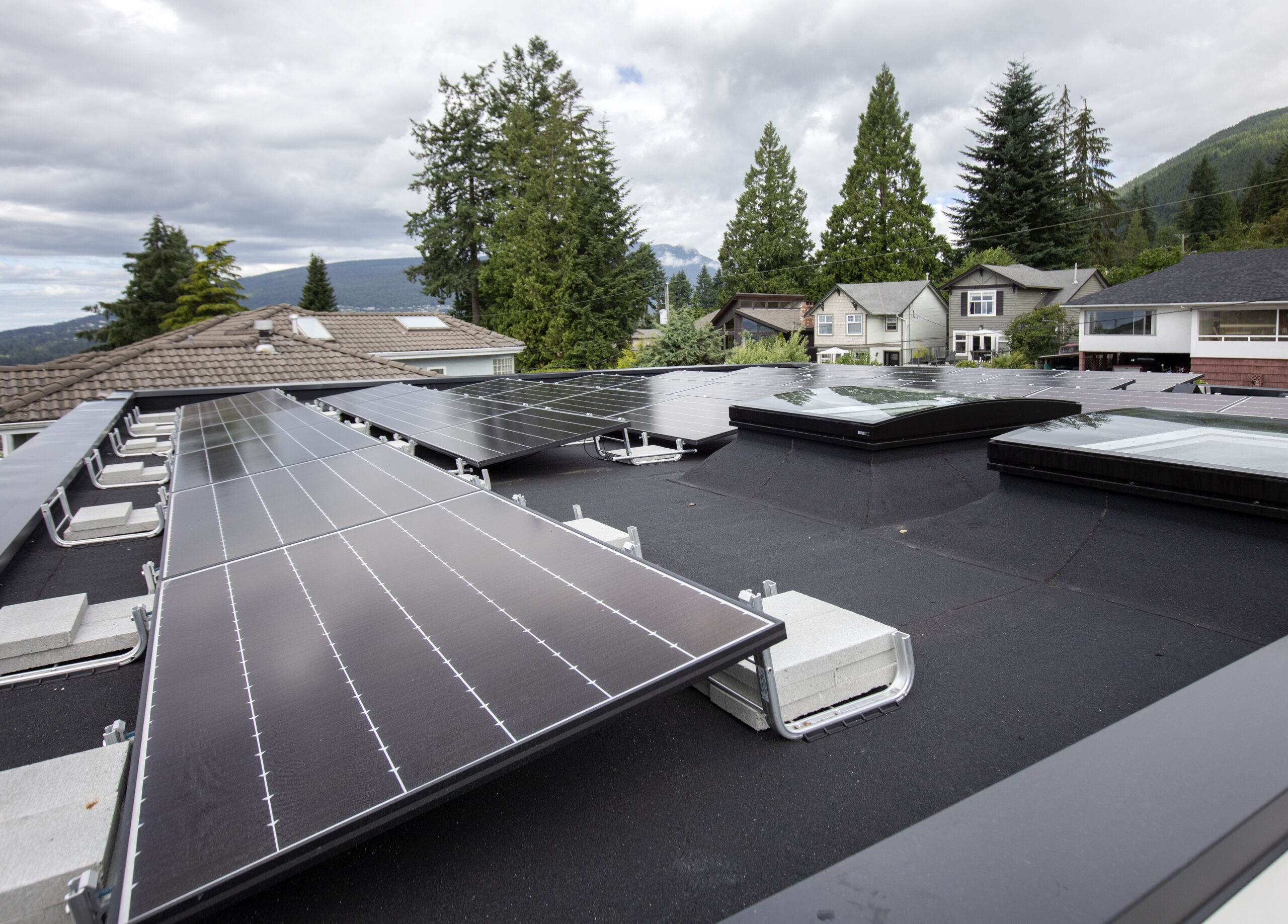
In most cases, Net Zero Energy homes in North Vancouver generate renewable energy with rooftop solar panels (solar photovoltaic (PV) panels). When paired with an ultra-efficient building envelope, the home can produce roughly the same amount of energy it consumes annually.
Energy generated by solar panels can either be stored in a battery for later use or fed back into the local power grid, where it can be credited through programs like BC Hydro’s self-generation (net metering) program.
Key Net Zero Home Features
Net Zero homes typically combine several components to create a fully integrated building system that minimizes energy loss and maximizes efficiency.
Key features typically include:
- High-performance building envelope. A Net Zero home starts with a tightly sealed, well-insulated envelope that prevents heat loss and drafts. This can be achieved through advanced framing and insulation methods, including systems like insulated concrete forms (ICF), which combine expanded Polystyrene (EPS) foam, high-density polypropylene plastic, steel reinforcement, and concrete.
- Triple-pane windows and high-performance doors. Often sourced from specialized suppliers, high-performance windows and doors help reduce heat transfer and drafts.
- High-efficiency heat pump. Most Net Zero homes in North Vancouver use air-source or ground-source heat pumps to provide both heating and cooling. These systems transfer heat, bringing it indoors in winter and moving it outside in summer, rather than generating it. This makes them far more efficient than traditional furnaces or baseboard heaters.
- Ventilation system (HRV/ERV). Ventilation systems like heat recovery ventilators (HRVs) and energy recovery ventilators (ERVs) are essential in Zero Emission homes, where airtight construction requires controlled, efficient airflow. These systems bring in fresh air while retaining heat from outgoing air, helping maintain consistent indoor air quality, comfort, and energy efficiency.
- Energy-efficient mechanical systems, lighting, and appliances. High-efficiency HVAC systems, lighting, and appliances help reduce overall energy demand without sacrificing comfort or functionality.
- Smart design and orientation. Net Zero homes are carefully designed and positioned to maximize natural light and passive solar gain (passive heat). This helps reduce heating and lighting needs, even in Vancouver’s cloudy climate.
- Renewable energy systems (typically solar panels). Many Net Zero Energy homes use solar photovoltaic (PV) systems to generate clean, on-site energy. This renewable energy offsets the home’s remaining electricity needs (for heating, cooling, lighting, and appliances), allowing the home to achieve net zero performance over time.
Are Net Zero Homes Off-Grid?
Most Zero Emission homes in Vancouver and across the Lower Mainland are not off-grid.
Typically, homeowners choose to stay connected to the electrical grid so they can draw power when needed. This can be helpful during periods of low solar production, such as in winter, or during emergencies, maintenance, or repairs.
It is possible to go fully off-grid, but for many homeowners, staying connected provides added reliability and peace of mind. That said, the right choice depends on your location, lifestyle, and priorities.
Net Zero Certification
To be officially labelled a Net Zero house in Canada, the home must be independently verified and certified through a recognized program, most commonly the Canadian Home Builders’ Association (CHBA) Net Zero Home Labelling Program. This is the leading certification standard for Net Zero homes in Canada.
The certification process involves working with a CHBA-qualified energy advisor and a third-party service organization to model, test, and verify that the home produces as much energy as it consumes annually.
Certification typically includes:
- Detailed energy modelling during design
- Blower door testing to verify airtightness
- On-site inspections throughout construction
- Final performance verification once the home is complete
Homes that meet these strict performance standards can carry the official CHBA Net Zero or Net Zero Ready label (more on this below).
CHBA-qualified Net Zero homes carry the following label:
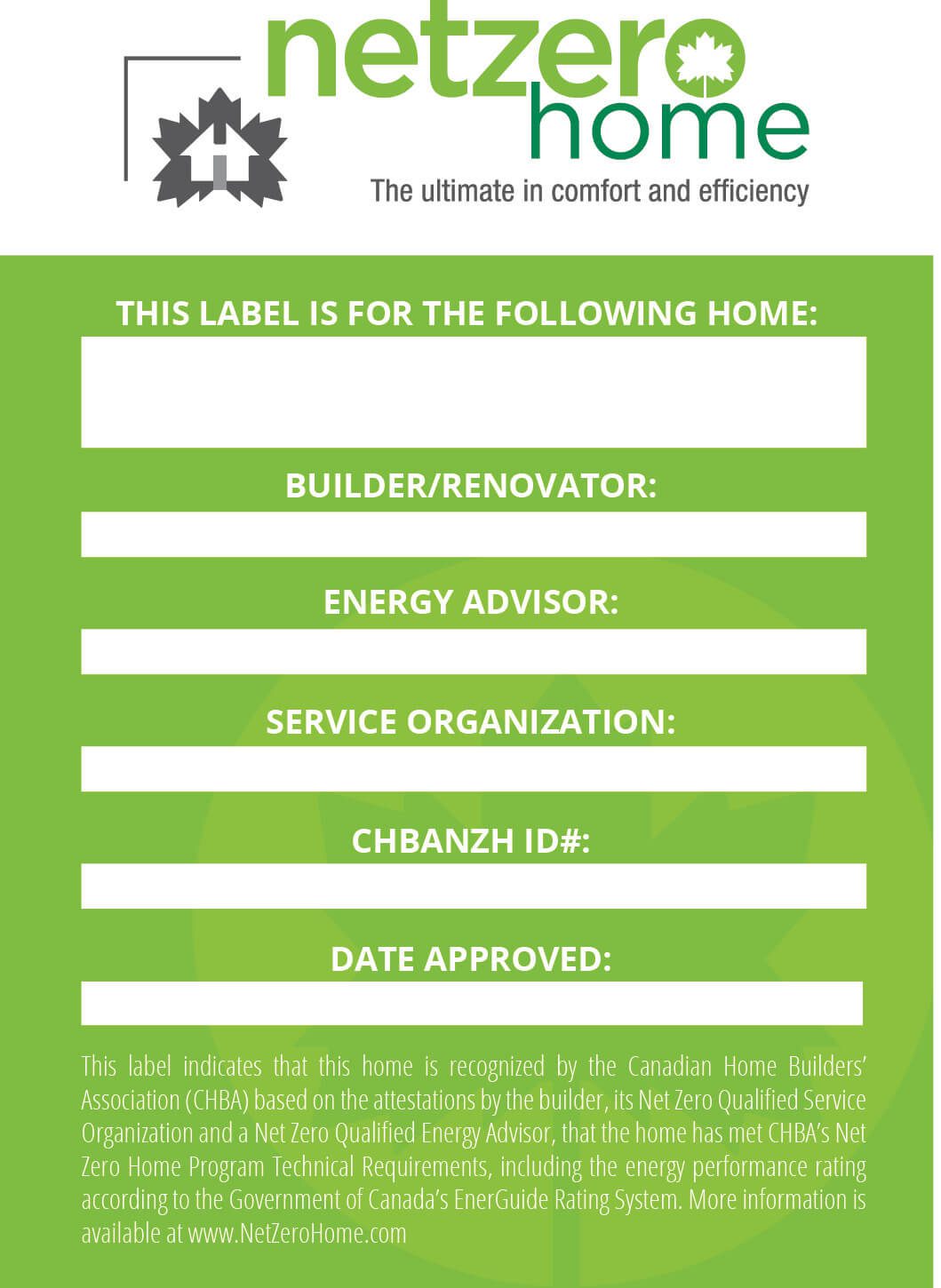
Source: CHBA
Can an existing home be converted to Net Zero?
Yes, it is possible to convert an existing home to Net Zero, but it typically requires a deep energy retrofit.
A Net Zero renovation may include:
- Upgrading insulation
- Improving airtightness
- Replacing windows and doors
- Installing high-efficiency mechanical systems, such as heat pumps and HRV or ERV ventilation
- Adding renewable energy like solar panels
In many cases, achieving net zero performance in an older home can be complex and costly, especially if the original construction was not designed for high performance.
How to Build a Net Zero Home (Step-by-Step)
Building a Net Zero house requires an integrated approach where design, construction, and mechanical systems work together to minimize energy use and generate renewable energy. In North Vancouver and across the Lower Mainland, this process must also account for local climate conditions, building codes, and energy standards.
Here’s how the process typically works:
Step 1: Choose an Experienced Net Zero Home Builder
Choosing the right Net Zero construction company is one of the most important decisions when building a Zero Emission home. Working with an experienced Net Zero builder in Vancouver helps avoid costly mistakes and ensures the home meets its intended performance goals.
PRO TIP: Look for qualified Net Zero home builders with proven experience and recognized credentials, such as those listed by the Canadian Home Builders’ Association (CHBA).
Hasler Homes is a CHBA Qualified Net Zero Energy Builder with experience delivering high-performance homes in North Vancouver and across the Lower Mainland, including one of the first Net Zero homes in the area, the Linda Vista project.
You can view CHBA-qualified Net Zero builders, including Hasler Homes, here: https://members.chbabc.org/qualifiednetzeroenergybuilders
Step 2: Design for Efficiency from the Start
Every Net Zero home begins with thoughtful design. This includes optimizing the home’s layout, orientation, and window placement to maximize natural light and passive solar gain.
Early-stage energy modelling is often used to guide decisions and to ensure the home can realistically achieve net-zero performance before construction begins.
Step 3: Build a High-Performance Envelope
The building envelope is the foundation of a Net Zero home. The home’s walls, roof, and foundation must be carefully designed and constructed to minimize heat loss, air leakage and energy demand.
This typically involves:
- High levels of insulation
- Airtight construction
- Thermal bridge reduction
- High-performance materials such as insulated concrete forms (ICF)
Step 4: Install High-Performance Windows and Doors
Windows and doors are a common source of energy loss in conventional homes. Net Zero Energy homes use triple-pane windows and high-performance doors to help prevent drafts and heat loss.
Proper placement and installation are just as important as the products themselves.
Step 5: Use Efficient Mechanical Systems
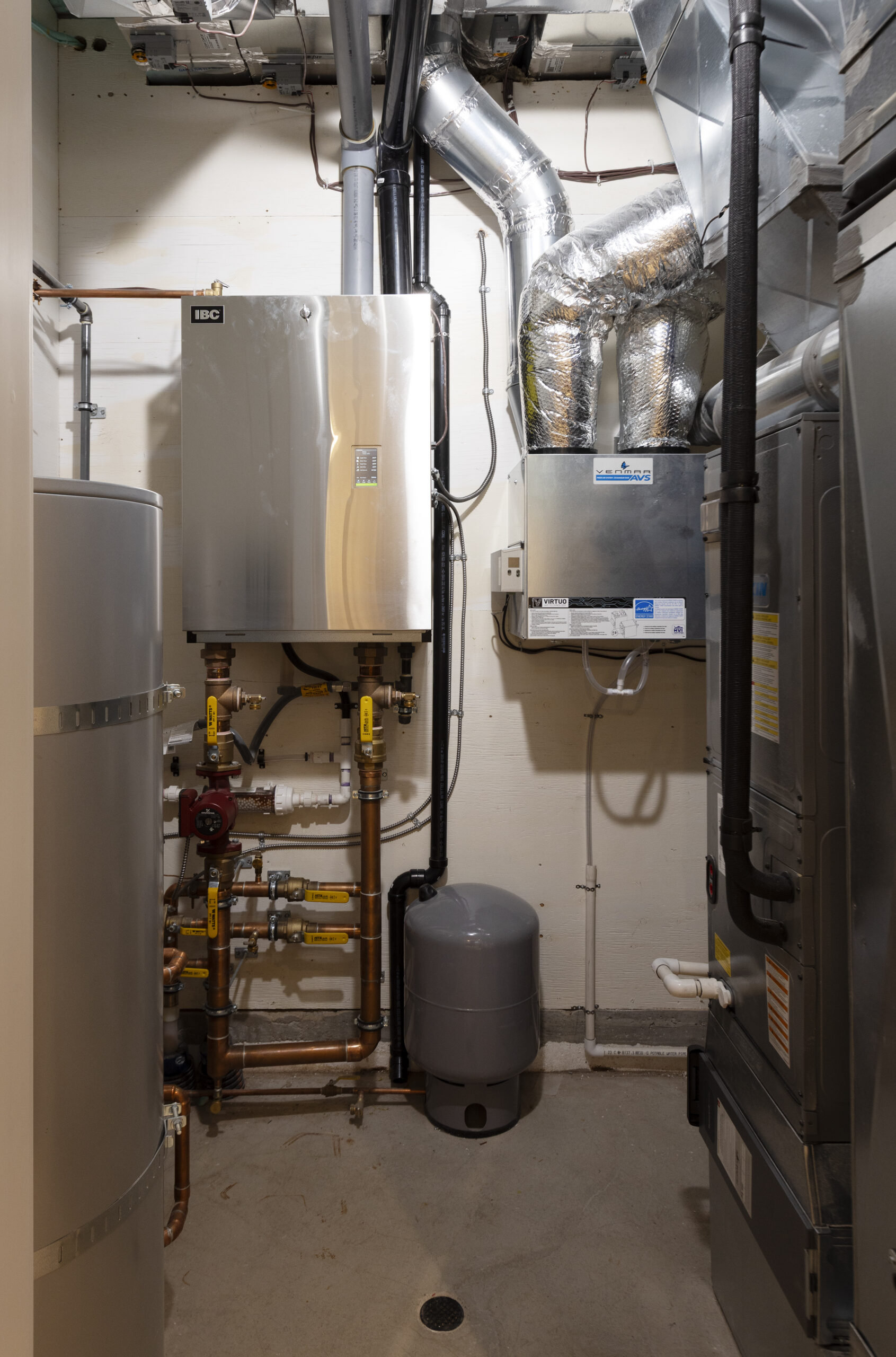
Net Zero homes use highly efficient systems for heating, cooling, and ventilation. These systems work together to maintain comfort while using significantly less energy than traditional systems.
These systems typically include:
- Air source or ground source heat pumps
- Heat recovery or energy recovery ventilation systems (HRV/ERV)
- High-efficiency hot water systems
Step 6: Add Renewable Energy
Once energy demand has been minimized, renewable energy systems are added to offset the remaining usage.
In most cases, this means installing solar photovoltaic (PV) panels.
In Vancouver, these systems are typically grid-tied and connected to BC Hydro’s self-generation (net metering) program. The goal is to generate enough energy annually to match the home’s total energy use.
Step 7: Test, Verify, and Certify
To achieve net-zero performance, the home must be tested and verified. This step ensures the home performs as designed and meets required standards.
This includes:
- Blower door testing to confirm airtightness
- Final energy modelling and performance verification
- Optional certification through programs like CHBA Net Zero
Together, these steps ensure the home achieves true net zero performance over time.
Building a Net Zero Home in Vancouver’s Climate
Building a Net Zero home in North Vancouver and across the Lower Mainland comes with unique challenges and opportunities. The region’s mild temperatures, high rainfall, and seasonal cloud cover all influence how homes are designed and built.
Key considerations when building a Net Zero house in Vancouver include:
- Moisture management and durability. With frequent rain and high humidity, proper detailing, ventilation, and building envelope design and construction are critical to preventing moisture issues and maintaining long-term performance.
- High-performance envelope. Reducing energy demand through insulation and airtightness is one of the most important factors for Net Zero homes in Vancouver.
- Efficient heating and ventilation systems. Heat pumps and HRV or ERV systems perform well in Vancouver’s moderate climate, providing consistent comfort and energy efficiency year-round.
- Optimized solar design. While solar panels are still effective in Vancouver, optimal roof design, orientation, and system sizing are essential to account for the seasonal variation in sunlight.
Net Zero Home Cost Breakdown
Net Zero homes typically cost more upfront to build than conventional homes, but the exact cost depends on the design, materials, site conditions, and performance goals. The additional investment comes from specific upgrades that improve energy performance and long-term efficiency.
Where the Additional Cost Comes From
| Component | What’s Different with a Net Zero Home | Impact on Cost |
| Building Envelope | Higher insulation, airtight construction, advanced materials | $$ |
| Windows & Doors | Triple-pane, high-performance systems | $$ |
| Mechanical Systems | Heat pumps, HRV/ERV, efficient hot water systems | $$ |
| Renewable Energy | Solar panels | $$$ |
| Design & Verification | Energy modelling, testing, and certification | $ |
For many homeowners, especially those building a long-term or forever home, the investment in sustainable construction and energy efficiency pays off over time.
In addition, incentives and programs in British Columbia, such as CleanBC Better Homes and BC Hydro programs, can help offset some of these upfront costs. Your Energy Advisor, along with your contractor, can also help you determine which programs and incentives apply to you.
Are Net Zero Homes More Affordable Than They Used to Be?
The cost of building a Net Zero Energy house has dropped significantly over the past 5 to 10 years as building methods and technology have improved.
According to the Canadian Home Builders’ Association (CHBA), the additional cost of Zero Emission homes has been reduced by up to 50% in many cases. This means that, over time, energy savings can help offset the higher upfront cost, making Net Zero Energy homes more affordable than many people expect.
Are Net Zero Homes Worth It? (Is It Worth the Cost?)
Short Answer: Yes, for many homeowners, a Net Zero home is worth the investment.
While upfront costs are higher, Net Zero homes offer lower energy bills, long-term savings, improved comfort, and stronger resale value. Over time, energy savings can help offset the initial investment, especially for those planning to stay in their home long-term.
That said, before deciding, it’s important to understand both the benefits and the potential drawbacks of building a Net Zero house.
Key Pros and Cons Overview
| Pros | Cons |
| Lower energy bills and long-term savings | Higher upfront cost |
| Improved comfort and indoor air quality | More complex design and construction |
| Durable, high-performance construction | Some design considerations |
| Reduced environmental impact | Seasonal solar variability |
| Higher resale value and future readiness | Requires an experienced Net Zero builder |
What Are the Benefits of Net Zero Homes?
Net Zero homes are designed to deliver more than just energy efficiency. They provide a combination of financial, environmental, and lifestyle benefits:
- Lower energy costs. Designed to produce as much energy as they use, Zero Emission homes can help reduce or even eliminate monthly energy bills.
- Improved comfort and indoor air quality. Airtight construction and ventilation systems (HRV/ERV) provide consistent temperatures and cleaner, fresher indoor air. This can help reduce allergens and asthma triggers such as dust, pollen, and other pollutants.
- Greater durability. High-performance materials and moisture control help reduce issues like drafts, condensation, and mould.
- Environmental benefits. Lower greenhouse gas emissions and reduced reliance on fossil fuels.
- Future-proofing and resale value. Built to exceed current building standards, Net Zero Energy homes are designed for the future, making them more attractive to future buyers.
What Are the Negatives of Net Zero Homes?
While the benefits of building green are significant, there are also a few important considerations to keep in mind:
- Higher upfront cost. Requires investment in better materials, systems, and renewable energy.
- More complex design and construction. Achieving net zero performance requires careful planning and an experienced Net Zero home builder.
- Design considerations. Some design choices, such as the home’s orientation and window placement, may require you to prioritize performance over aesthetics.
- Seasonal solar variability. Solar production changes throughout the year, particularly in Vancouver’s climate.
Net Zero vs Net Zero Ready Homes
If you want to build a high-performance home, it’s important to understand the difference between a Net Zero home and a Net Zero Ready home.
A Net Zero house is built to be extremely energy-efficient. It includes on-site renewable energy systems, such as solar panels, to produce as much energy as it consumes annually.
A Net Zero Ready home, on the other hand, is built to the same high-efficiency standards but does not yet include renewable energy systems. Instead, it is designed and constructed so that solar panels or other renewable systems can be easily added in the future.
Key Differences
| Net Zero Home | Net Zero Ready Home |
| Includes renewable energy (e.g., solar panels) | Does not include renewable energy yet |
| Produces as much energy as it uses | Built to achieve net zero once renewable energy is added |
| Fully net zero at completion | “Future-ready” for net zero |
| Best for: immediate energy and long-term cost savings | Best for: spreading out costs over time |
Which One Should You Choose?
A Net Zero Ready home is a practical option for homeowners who want to spread out costs over time. By building to Net Zero standards first, you can add renewable energy later when timing or budget allows.
However, building a complete Net Zero home from the start allows you to maximize energy savings immediately and avoid the added cost and complexity of future upgrades.
Net Zero vs Passive House vs High-Performance Homes
While all three of these approaches aim to improve performance, they are not the same. The key difference comes down to how energy is reduced and whether renewable energy is used.
- Net Zero homes are designed to produce as much energy as they use over the course of a year. To do so, they combine a high-performance building envelope with renewable energy systems, such as solar panels.
- Passive House homes focus on reducing energy demand as much as possible through advanced insulation, airtightness, and high-performance windows. They use very little energy, but do not necessarily produce their own.
- High-performance homes is a general term used to describe homes built to perform better than standard construction. This can include Net Zero and Passive House homes, as well as other homes that prioritize energy efficiency, comfort, and durability.
Key Differences
| Type | Primary Focus | Energy Use | Renewable Energy |
| Net Zero | Home produces as much energy as it uses | Very low overall energy use | Required |
| Passive House | Minimizes energy use through design and construction | Extremely low energy use | Optional |
| High-Performance Home | Improves efficiency, comfort, and durability | Better than standard homes | Not required |
Which Is Better?
While there is no one-size-fits-all answer, for most homeowners in Vancouver, Net Zero homes offer the best balance of performance, cost, and long-term value.
That said, the right choice for you depends on many factors, including your goals, budget, and how you plan to use your home in the long term.
Common Mistakes To Avoid When Building a Net Zero Home
Net Zero homes only perform as intended when every detail is executed correctly. Therefore, avoiding common mistakes is essential to achieving true net-zero performance.
- Failing to plan ahead. Building a Net Zero home requires early coordination between the builder, designer, energy advisor, and trades. Every trade should understand how their work affects the building envelope. Small penetrations, gaps, or poorly sealed openings can compromise airtightness and performance.
- Focusing on solar before efficiency. A high-performance envelope should come first. Reducing energy demand is more important than adding renewable energy.
- Poor airtightness and detailing. Small gaps in construction can significantly impact performance and comfort. Be sure your builder runs blower door tests throughout the project to ensure airtightness.
- Incorrect window placement or sizing. Windows should be positioned to optimize natural light and minimize heat loss.
- Oversizing or undersizing mechanical systems. Systems must be properly sized and installed to match the home’s actual energy needs. Your Energy Advisor will map out a plan to make your home Net Zero, tell you the solar panel needs, and help you determine the proper size of mechanical systems for your home.
- Working with an inexperienced contractor. Net Zero construction requires specialized knowledge, careful execution, and coordination across all stages. Choosing a builder with proven high-performance or Net Zero experience can help avoid costly mistakes.
Examples of Net Zero Homes in North Vancouver
At Hasler Homes, we have hands-on experience designing and building high-performance homes, including some of the first Net Zero Energy homes in North Vancouver.
Here are two examples that showcase what’s possible.
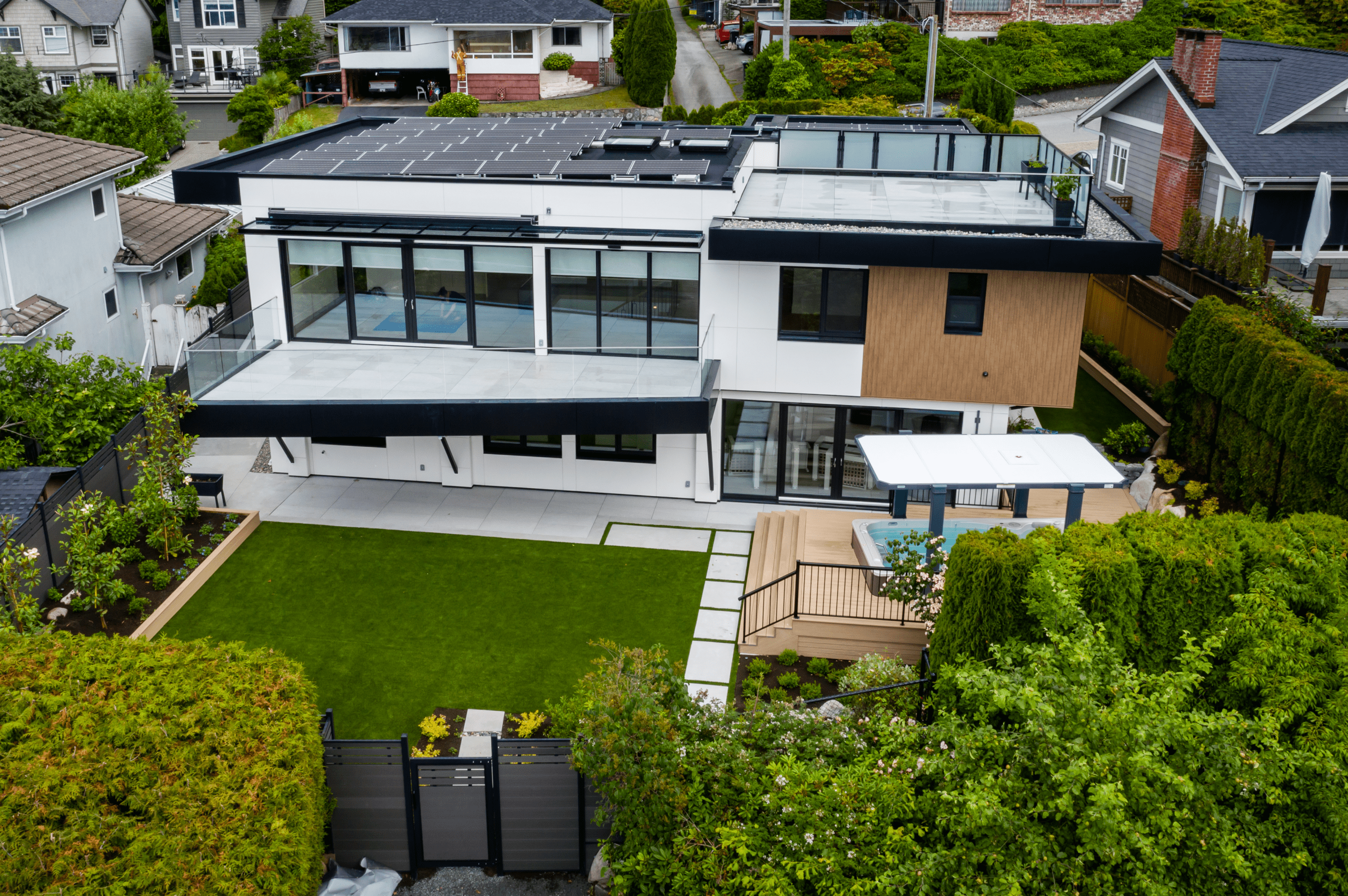
Pictured: Linda Vista Net Zero home in North Vancouver, built by Hasler Homes
Linda Vista: One of North Vancouver’s First Net Zero Homes
Linda Vista is one of the first certified Net Zero homes in North Vancouver, designed to deliver exceptional energy performance, comfort, and long-term durability.
Net Zero Features:
- High-performance building envelope and airtight construction
- Triple-pane windows and high-performance doors
- Heat pump and HRV ventilation system
- Rooftop solar photovoltaic (PV) panels
Project Awards & Achievements:
- CHBA National Awards Winner: Net Zero Home Award
- Georgie Awards Finalist: Best Certified Custom Home
- HAVAN Awards Finalist: Best Certified High-Performance Home: New or Renovated
- BuiltGreen Canada Platinum Certified
See the complete project: Linda Vista
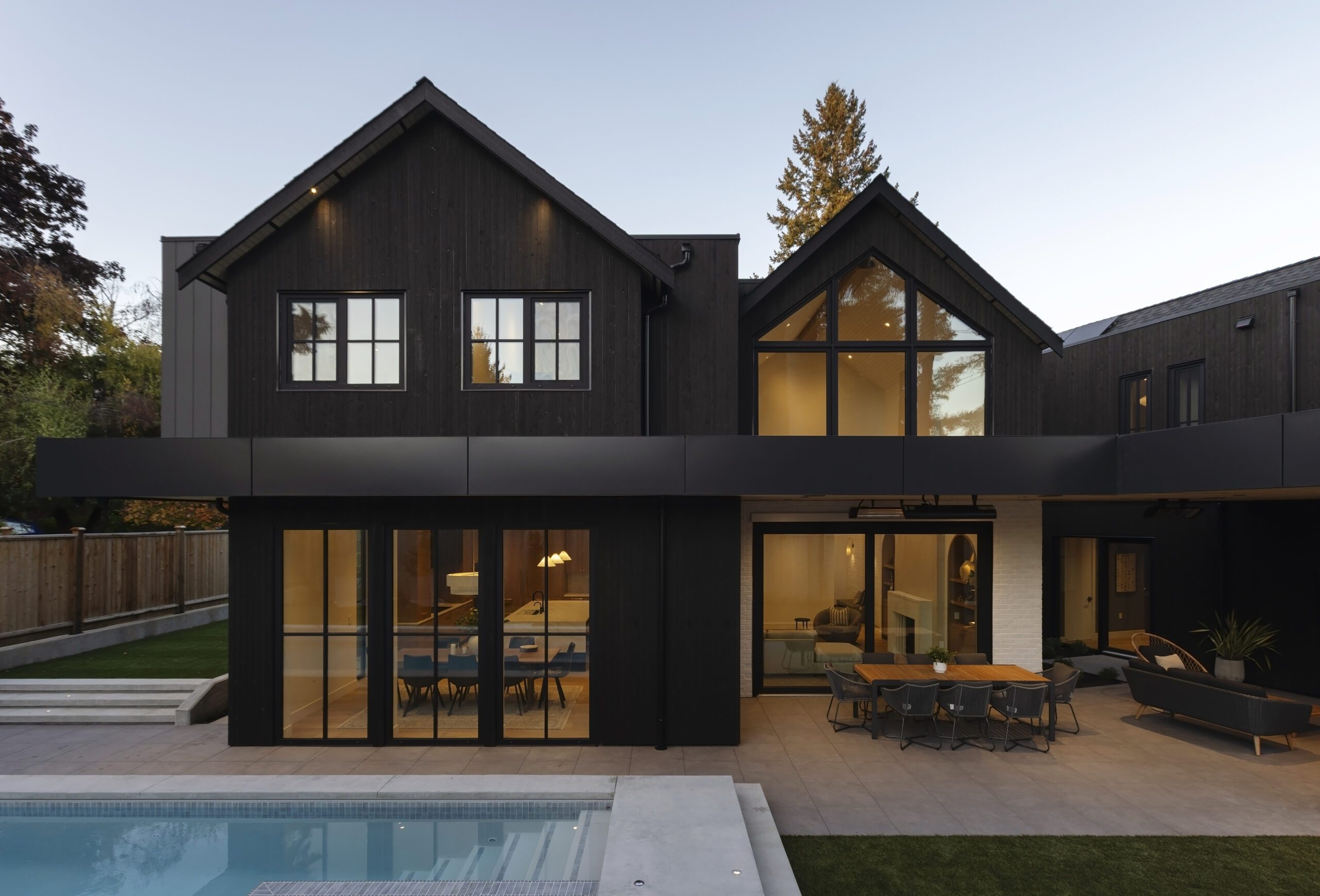
Pictured: Haven Net Zero home in North Vancouver, built by Hasler Homes
Haven (Net Zero Lifestyle): Hasler Homes’ Net Zero Residence
Haven is a Net Zero house in North Vancouver, designed as a fully integrated, high-performance home that combines advanced envelope design, efficient systems, and renewable energy to achieve net-zero performance.
Net Zero Features:
- Advanced insulation and airtight construction
- Energy-efficient mechanical systems
- Integrated solar energy system
- Designed for long-term comfort and sustainability
- Built to exceed current energy performance standards
Project Awards & Achievements:
- CHBA National Awards Finalist: Best Custom or Renovated Net Zero Home
- CHBA BC Georgie Awards Finalist: Custom Home Valued $2,000,000-$3,000,000
- CHBA BC Georgie Awards Finalist: Best Primary Suite Under $125,000 – New or Renovation
- CHBA BC Georgie Awards Finalist: Best Energy Labelled Home – Custom
- HAVAN Awards Finalist: Best Custom Home: $2 Million – Under $3 Million
- HAVAN Awards Finalist: Best New Custom Kitchen: Under $175,000
- HAVAN Awards Finalist: Best Energy Labelled Home: Custom
- BuiltGreen Canada Net Zero Energy+ Certified
- CHBA BC Net Zero Home Certified
See the complete project: Haven (Net Zero Lifestyle)

The Haslers’ Experience with Their Own Net Zero Home
Natalie and Greg Hasler built their own Net Zero home on the North Shore (Haven, pictured above). Here’s what they have to say about the experience and the benefits they’ve seen since moving in.
“The biggest challenge building Haven was balancing the budget while still investing in the right high-performance features. We prioritized the details that would make the biggest difference in performance, including a super airtight envelope, high-quality insulation, and quality triple-paned windows, and the final outcome exceeded our expectations.
Our Net Zero home is quieter, draft-free, and the temperature stays very stable year-round. Our energy consumption and costs are much lower and more predictable, and the indoor air quality feels fresher and cleaner, thanks to constant ventilation.
Overall, the biggest difference we’ve noticed day to day, compared to living in a standard home, is how consistently comfortable it is. We were truly surprised to see how little energy is actually needed to stay comfortable year-round!
So, was it worth building a Net Zero home in North Vancouver? Absolutely. It’s more comfortable, more efficient, and better long-term – a home that’s built to last for multiple generations.“
Looking for a Net Zero Home Builder in North Vancouver?
Building a Net Zero house requires the right team, experience, and attention to detail. From design and energy modelling to construction and final performance testing, every step plays a critical role.
Hasler Homes is a CHBA Qualified Net Zero Energy Builder, with experience designing and building high-performance homes across North Vancouver and the Lower Mainland.
If you are considering building a Net Zero home, we would be happy to walk you through the process, answer your questions, and help you determine the right approach for your project.
Planning a Net Zero home? Let’s talk.
Call: 778.688.7846
Email: info@haslerhomes.ca
Or contact us here: https://haslerhomes.ca/contact/